What is Copyright?
A lot of people haven't asked me lately, "You know Weis, I'm confused by all this
legislative hooha over online music. With all the lawsuits, speeches, and so forth,
I'm not sure whose side I should be on. Can you explain this to me, without
using any big words, doing any research, or citing any actual facts?" This article
will attempt to answer that question.
You see, it all comes down to copyrights. A couple hundred years or so ago, Congress or
the President or someone invented the idea of copyrights. Of course, they
couldn't copyright the idea yet, so it became community property, and was instituted by
the Government as law. The idea behind the law was that if inventers and artists
got the exclusive right to sell whatever they produced, that would encourage people
to create things. So, they figured, if you're the only one that gets to make money
off of your creation, you're more likely to create something. This is what, back in
olden times, they called "spurring innovation."
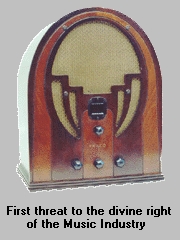 Now, fast-forward to the 1950's. Back then, some big companies called the Music
Industry spurred innovation by buying some music from some musicians, so that the Music
Industry could sell it for them. That's not exactly the same as copyright, since the
Music Industry didn't actually sing the music, but that's okay because the
musicians were poor, and as everyone knows, singing costs lots of money. So, the
Music Industry invented the idea of putting about ten songs on a thin platter
called a "record" and charging a bunch of money for it, and
they got a copyright on that idea, and started doing it. Then later, some other
guys got an idea of sending music through the air to a device called a "radio", which
was pretty much like sending it to people on a record, except it didn't cost the
people anything. So, the Music Industry said, "Hey, you can't send music to people! We
already copyrighted that!" and the radio people had to do whatever the record folks
told them to.
Now, fast-forward to the 1950's. Back then, some big companies called the Music
Industry spurred innovation by buying some music from some musicians, so that the Music
Industry could sell it for them. That's not exactly the same as copyright, since the
Music Industry didn't actually sing the music, but that's okay because the
musicians were poor, and as everyone knows, singing costs lots of money. So, the
Music Industry invented the idea of putting about ten songs on a thin platter
called a "record" and charging a bunch of money for it, and
they got a copyright on that idea, and started doing it. Then later, some other
guys got an idea of sending music through the air to a device called a "radio", which
was pretty much like sending it to people on a record, except it didn't cost the
people anything. So, the Music Industry said, "Hey, you can't send music to people! We
already copyrighted that!" and the radio people had to do whatever the record folks
told them to.
Then, the Music Industry figured out that, hey, people kind of liked getting music
for free through the radio, so much that they would find out about new music from it.
So the record people thought, "Hey, as long as we control these radio people, we can
make people listen to whatever we want, and decide what music will get popular and
what won't." So they started telling radio people, "If you do this, and don't do that,
then we'll let you play the songs we have copyrights for" and the radio people didn't want
to go along, but they had to, or else they would go broke.
This is a good example of that "spurring innovation" thing I mentioned earlier.
After a while, the Government found out that the Music Industry was telling the radio
people what to do, so they had a bunch of big trials, with lots of accusations and
yelling and money and hoopla and Congressional Panels and whatnot, but eventually they
just told the Music Industry to stop telling the radios what to do. Specifically, they
said the radio people could play
whatever they wanted, but they had to pay the Music Industry a flat price for each song -
they called this a "mandatory license." Then, the Music Industry had to give some of the
money to the people who made the music (unless the musician was black, in which case the
Music Industry got to wait about forty years and give it to their kids). So the Music
Industry had to go out and find other ways of controlling the radio people, which
they still use today.
Nowadays, things have changed. The Music Industry has invented a completely new
way of sending people music: they put about ten songs on a thin platter called a "CD" and
they charge a bunch of money for it. Then, some people came along and got the idea
of sending music through the internet to a device called a "computer", which was pretty
much like sending it to people on a platter, except it didn't cost the
people anything. So, the Music Industry said, "Hey, you can't send music to people! We
already copyrighted that!" and the internet people had to do whatever the Music Industry
told them to do.
 However, the Music Industry had learned from the radio people, so this time they're being
very careful, because they don't want the Government to come in with another mandatory
license to spoil their fun. So first, they very cleverly drove all of the internet
music companies out of business. Then, they spurred some more innovation by starting their
own companies to do the same things as the ones they had just sued out of existence.
This way, they can send music to people over the internet the way people want, but
they don't have to worry about anyone else controlling anything, and they can tell people
what to do again.
However, the Music Industry had learned from the radio people, so this time they're being
very careful, because they don't want the Government to come in with another mandatory
license to spoil their fun. So first, they very cleverly drove all of the internet
music companies out of business. Then, they spurred some more innovation by starting their
own companies to do the same things as the ones they had just sued out of existence.
This way, they can send music to people over the internet the way people want, but
they don't have to worry about anyone else controlling anything, and they can tell people
what to do again.
Unfortunately, there's a wrinkle in this plan that no one could possibly have foreseen -
sometimes the Music Industry would tell people to do something, and they wouldn't do it.
So, to correct this, the Music Industry need to ask the Technology
Industry to help out. That way, if the people tell their computers to do something,
and the Music Industry tells it to do something else, the computer will listen to the
Music Industry. Which is fair, because the Music Industry copyrighted computers, too.
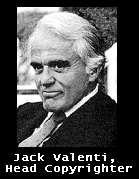
To help out with this, the Music Industry copyrighted a senator named Fritz Hollings
so that he would make a law that would change all of the regular computers into
Music Industry computers. This sounds like it would be hard to do, but fortunately
the Music Industry is friends with Disney, who copyrighted magic wands.
And, that's where we are today. So what does the future hold? Well, the Government's
going to hold a bunch of big hearings, and everyone's going to argue a lot, but
eventually, I think the Music Industry will figure out that all the people who listen
to the music are the problem. So all they really need to do is send music to the
people's computers, and charge the people for how much music they send, but make it
so the people can't actually hear the music, because then the people would be violating
the copyright, which (as we've seen) would not spur innovation. I think
that, when they figure it out, the Music Industry will think this is a great idea - but
it's too bad they can't use it, because I copyrighted it.
Back to PenIsMightier.com